
Micajah and Wiley Harpe are often described as the first documented serial killers in American history — operating across Tennessee and Kentucky in the 1790s, killing men, women, and children with almost no pattern beyond opportunity and impulse. They are believed to have killed between 39 and 50 people. They killed for no consistent reason. When a baby’s crying irritated Micajah, he killed the baby.
In August 1799, near the end, Micajah murdered the wife and infant child of a frontier settler named Moses Stegall. Then he moved on.
The Horror
On 24th August 1799, a posse finally caught up with the Harpes. During the chase, Micajah “Big” Harpe was shot in the spine and leg as he tried to escape. He couldn’t move. As he lay dying in the mud, he is said to have confessed to around twenty killings. According to local tradition and later retellings, he was confessing to Moses Stegall — the man kneeling over him, whose wife and baby he had killed only weeks earlier.
Moses Stegall cut off Micajah Harpe’s head with a butcher knife while he was still conscious. The head was carried to a crossroads near Highland Lick, Kentucky, and placed on a pole as a warning to other outlaws. The place became known as Harpe’s Head, and the road in that area has been called Harpe’s Head Road ever since.
Wiley Harpe escaped that day. He was eventually captured, tried, and hanged in February 1804. His head was also displayed on a pole, this time along the Natchez Trace, as a matching warning to travellers and would‑be bandits. Two brothers. Two heads on poles. Five years apart.
The Modern Relic
Harpe’s Head Road still exists in what is now Webster County, Kentucky — the name has never been changed, and the historical marker stands alongside modern Highway 60. Local lore says that after Micajah’s skull had weathered on the pole, a woman reputed to be a witch took it down, ground parts of it to powder, and used it in a potion to heal a sick relative. Travellers along that stretch of road and the Trace later told stories of hearing laughter in the tree line near the spot where the head had once stared down the road.
Nearby on the Dark Atlas
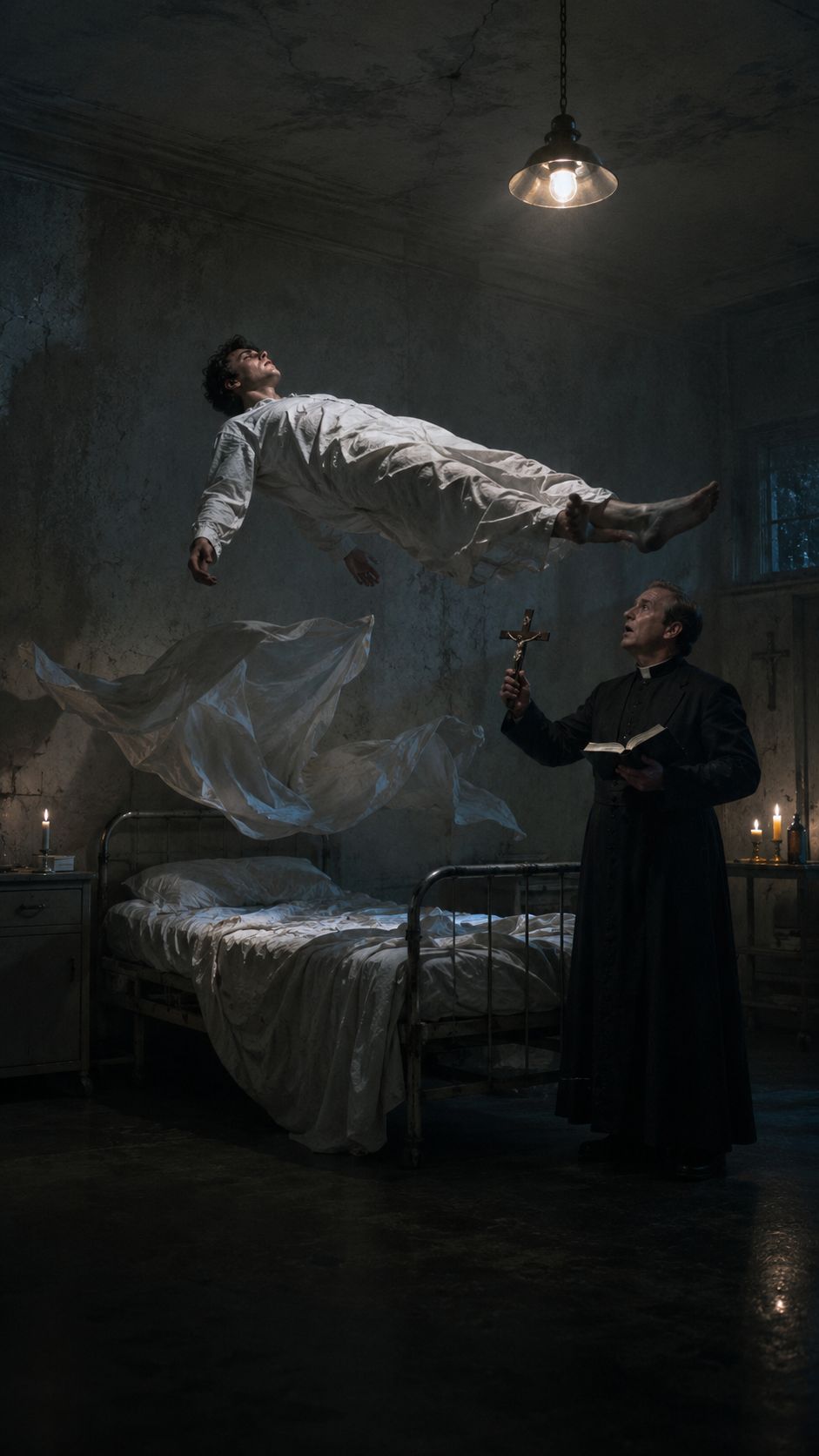 The Real Boy Behind The Exorcist
A film called it the most terrifying ever made — but it began with a real thirteen-year-old boy and a priest's sealed diary.
St. Louis, United States · 1949 · 257 km away
- The Fire That Killed 322 Men Locked in Their Cells
As flames tore through an overcrowded cellblock, guards had the keys, and hundreds burned to death still chained inside.
Columbus, United States · 1930 · 488 km away
 The Carmaker Who Spread A Forged Conspiracy
The man who put America on wheels used his newspaper empire to spread a fabricated antisemitic conspiracy to millions.
Dearborn, Michigan, United States · 1920 · 659 km away
 The Deadly Origin Of The Word Deadline
Long before it meant a due date, a dead line marked the boundary where Civil War prisoners could be shot on sight.
Andersonville, Georgia, United States · 1864 · 670 km away