
He is one of the most beloved writers who ever lived — the warm, moralising heart of the English Christmas, the man who gave us Ebenezer Scrooge and Tiny Tim, the great champion of the poor, the downtrodden, and the family hearth. Charles Dickens built his entire reputation on warmth, decency, and moral conscience. But behind that cuddly public image lay a genuinely dark and cruel secret. Because the beloved author of A Christmas Carol tried to have his own perfectly sane wife locked away in a lunatic asylum — to be rid of her for a girl the same age as his daughters.
Charles Dickens married Catherine Hogarth in 1836, and over the next twenty-two years she bore him ten children. In the early days he adored her, writing her tender, affectionate letters, calling her his “dearest life.” But by the late 1850s, everything had changed. Catherine had spent two decades pregnant and raising his enormous family. She had, in the cold words of one contemporary account, “borne ten children and lost many of her good looks, was growing old, in fact.” And Charles Dickens, now rich and world-famous, had grown tired of her.
The Horror
In 1857, the 45-year-old Dickens met and became infatuated with a young actress named Ellen “Nelly” Ternan. She was eighteen years old — twenty-seven years his junior, and close in age to his own daughters. Dickens fell for her completely, and he decided that his wife of over two decades, the mother of his ten children, was now simply in the way. And the way he set about removing her was genuinely cruel, and grew crueller by the step.
First, the humiliation at home. Dickens had a partition physically built down the middle of the marital bedroom, walling his wife off from him, turning their shared room into a divided space that shut her out. Then, in 1858, he forced a formal legal separation — a scandalous, highly unusual step in Victorian England. And under the harsh laws of the time, the separation was devastating for Catherine. She was made to leave the family home. Most of the children remained with Charles, although their eldest son, Charles Jr., lived with Catherine. She was cut off from the daily life of the large family she had raised. And because Dickens chose to separate from her rather than divorce, Catherine was left in a cruel limbo: cast out, but still legally bound, unable ever to remarry or build a new life.
But Dickens had a problem. He was one of the most famous men in Britain, and his entire brand — the source of his wealth and his adoring public — was built on being a wholesome family man and a moral conscience for the nation. Simply abandoning his loyal wife of twenty-two years for a teenage actress could destroy that image. So he needed a justification. And the one he reached for was monstrous. He began to spread the story that Catherine was mentally ill — that she suffered from a “mental disorder.” He needed the world to believe that he was not a callous husband discarding his wife, but a long-suffering man burdened with an unstable one.
For over a century and a half, scholars assumed that this cruel slur was as far as it went — an ugly rumour, a convenient lie. But in 2019, a professor at the University of York named John Bowen analysed a long-overlooked cache of ninety-eight letters held at Harvard University, and uncovered the genuinely shocking truth. The rumour had not been an idle threat. According to Catherine’s own later account, Dickens had actually tried to have his wife committed to a lunatic asylum.
The Modern Relic
The revelation came from letters written by a man named Edward Dutton Cook, who became Catherine’s neighbour and friend after the separation. As Catherine lay dying in 1879, in pain and taking morphine, she finally poured out to Cook the full story of how her husband had treated her twenty years earlier. And Cook, in a letter, recorded her account in words that are chilling in their plainness. Dickens, he wrote, “discovered at last that she had outgrown his liking. She had borne ten children and had lost many of her good looks, was growing old, in fact. He even tried to shut her up in a lunatic asylum, poor thing! But bad as the law is in regard to proof of insanity, he could not quite wrest it to his purpose.”
He could not quite wrest it to his purpose. Read that again. Charles Dickens tried to have his sane wife declared insane and locked away — and the only reason he failed is that the law, as bad as it was, could not quite be twisted far enough. And here is the detail that reveals just how sane Catherine really was: the attempt collapsed because a doctor, commonly identified as asylum superintendent Thomas Harrington Tuke, actually examined Catherine and found no evidence at all that she suffered from any mental disorder. There was nothing wrong with her. Her only “illness” was being an inconvenient, ageing wife who stood between Dickens and an eighteen-year-old.
The evidence deserves one honest caveat. No surviving committal application signed by Dickens has been found. The asylum-attempt evidence comes through Cook’s letter, recording Catherine’s own account around twenty years after the separation. But Professor Bowen concluded it was “almost certainly” true, and the University of York’s research found that Dickens had attempted to bend the law to have Catherine confined despite her evident sanity.
Thwarted from locking her away, Dickens turned to his most powerful weapon: his fame. He took the extraordinary step of publishing a public statement in the press about the separation, in which he disparaged Catherine, implying she was a cold and inadequate mother, hinting that “some peculiarity of her character” had left the children to be raised by others. He used his vast public platform to smear the reputation of the woman he had cast aside, so that the world would take his side. And it worked. For generations, Dickens remained the beloved national treasure, and Catherine was largely forgotten.
Perhaps the most damning verdict came from within his own family. His and Catherine’s daughter, Kate, later said that it was her father, not her mother, who had been the unstable one during that terrible time. “My father was like a madman,” she said. “He did not care what happened to any of us.” The man who tried to have his wife declared mad was, by his own daughter’s account, the one behaving like a madman.
Catherine Dickens lived out the rest of her life apart from Charles, unable to remarry, largely separated from the family she had spent two decades raising, in the shadow of the smear her famous husband had spread. She died in 1879. And as she was dying, she gathered up the letters Charles had written her in the early, loving years of their marriage, and gave them to her daughter with a heartbreaking instruction: to give them to the British Museum, “so that the world may know he loved me once.” She wanted proof, after everything, that she had once been loved — before the great, warm-hearted moralist of Victorian England tried to have her locked away, and settled instead for destroying her name.
Nearby on the Dark Atlas
 The Battlefield Origin Of Biting The Bullet
Before anaesthesia, wounded men bit down on lead to endure the surgeon's knife, or so the grim legend says.
London, United Kingdom · 1891 · same site
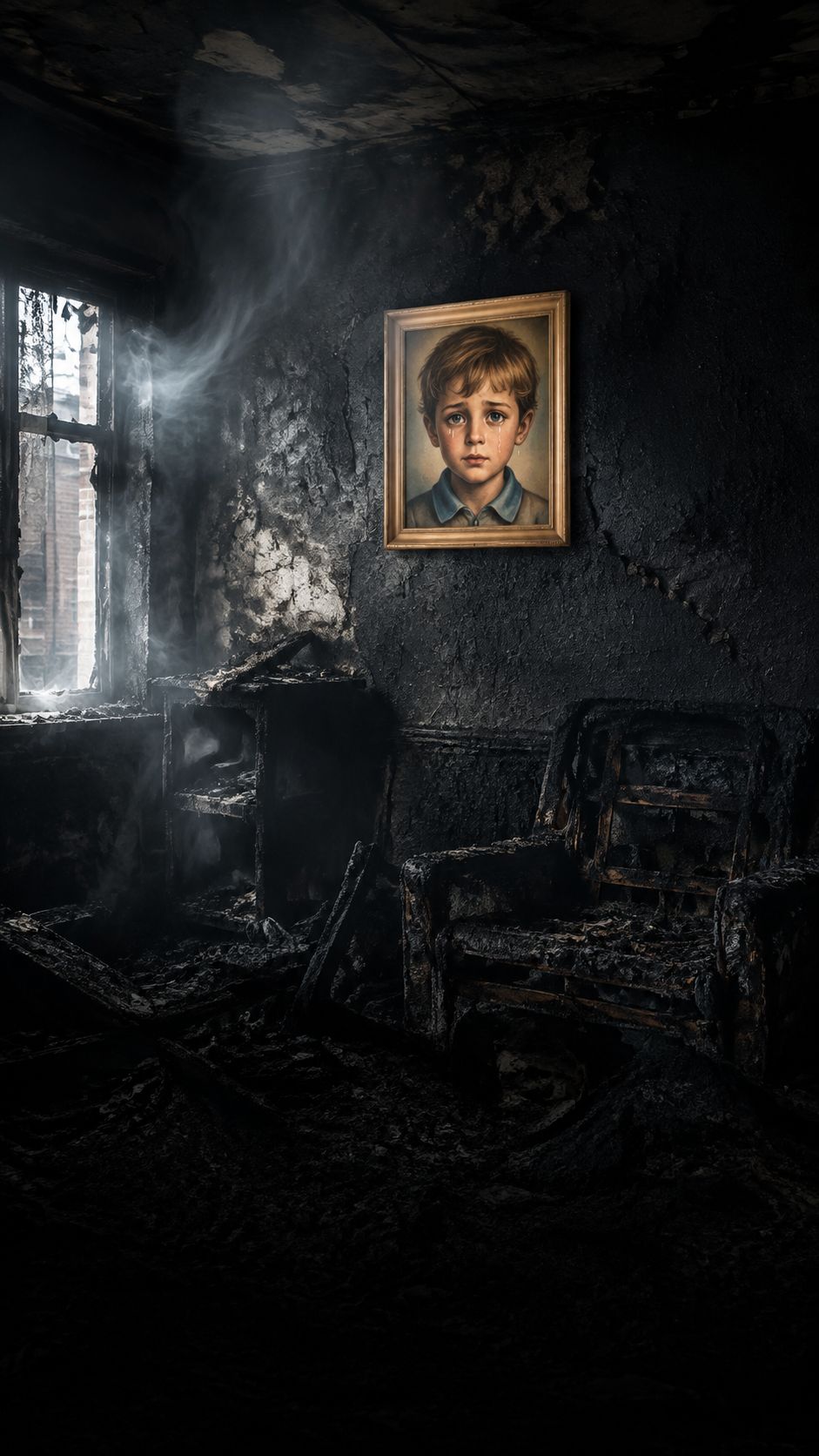 The Cursed Painting That Survived House Fires
A cheap mass-produced print sparked a nationwide panic that it caused fires, and always survived the ashes untouched.
London, United Kingdom · 1985 · same site
- The Disease That Killed By Nightfall
Tudor England lived in terror of a plague so fast it could kill a healthy person before sundown.
London, United Kingdom · 1485 · same site
- The Forgotten Poet Who Defended Eve
She became the first Englishwoman to publish an original book of poetry, then history erased her almost entirely.
London, United Kingdom · 1611 · same site
More like this
- The Poisoner Who Weaponised A Town's Sweet Shops
She poisoned an entire town's confectionery to disguise the murder of a woman she hated, killing a child she never met.
Brighton, United Kingdom · 1871
 The King Left To Starve Beneath Rome
A Numidian king who beat Rome with bribery for years was finally stripped naked and left to starve in a pit.
Rome, Italy · 104 BC
 The Island Of The Dead In Venice's Lagoon
A tiny forbidden island soaked in plague pits and asylum horror sits in full view of romantic Venice.
Poveglia, Venice, Italy · 1922
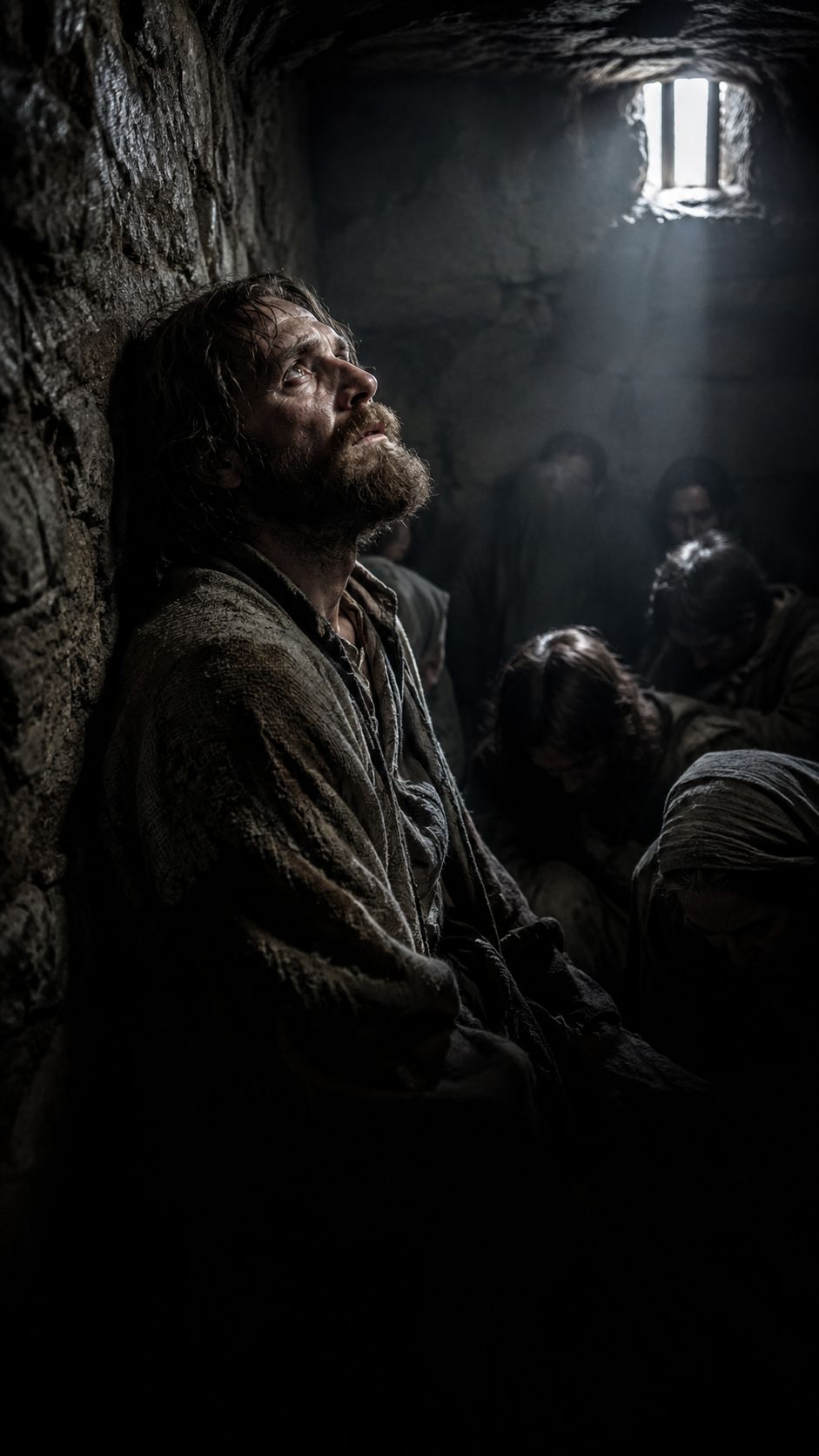 The Covenanters' Vault Of Dunnottar Castle
167 prisoners were crammed into a single cellar of a clifftop castle for refusing to abandon their faith.
Dunnottar Castle, Stonehaven, United Kingdom · 1685