
In 1611, a woman named Emilia Bassano Lanier did something no woman in England had ever done before: she published a book of her own original poetry, under her own name, and declared herself a poet. It was an act of astonishing courage in a world that believed women had no business writing at all. And her poetry was not meek or decorative — it was radical, a fierce and eloquent defence of women that reads like a feminist manifesto three hundred years ahead of its time. And yet today, almost no one knows her name. History very nearly erased her completely. And where she does survive in popular memory, it is not for her own groundbreaking work at all, but as a mysterious, nameless shadow in the love poems of a far more famous man: the possible “Dark Lady” of Shakespeare’s sonnets.
Emilia’s story begins as an outsider’s story. She was born in London in 1569 into the Bassano family, Venetian‑born court musicians who had come to serve the Tudor kings. The family was Italian, and probably of Sephardic Jewish descent — foreigners and outsiders in Elizabethan England. Orphaned of her father while still a child, the young Emilia had one great stroke of fortune: she was taken into the household of noblewomen and given a superb education, learning Latin and the classics, schooling almost no ordinary girl of her time would ever receive.
The Horror
But a fine mind was a dangerous gift for a woman without fortune, and Emilia’s life took the hard path that awaited clever, beautiful, but powerless women in that age. While still a teenager, she became the mistress of a much older and powerful man: Henry Carey, Lord Hunsdon, the Queen’s Lord Chamberlain, a man about forty‑five years her senior. And here the threads of history tangle in a fascinating way, because Lord Hunsdon was also the patron of the acting company that a certain playwright from Stratford belonged to: the Lord Chamberlain’s Men, Shakespeare’s company. Emilia moved, in other words, in the very world of the London theatre and of William Shakespeare himself.
When Emilia became pregnant by the elderly Hunsdon, she was hastily married off to cover the scandal — wed to a court musician named Alfonso Lanier, taking the surname by which we know her. It was, by the records, an unhappy marriage. Her husband ran through her money and left her in financial distress. She suffered several miscarriages, and buried a baby daughter who died at only ten months old. This was the reality behind the poetry: a woman of brilliance and education, reduced to a cast‑off mistress and an unhappy wife, watching her security and her children slip away. It was from within this hard and precarious life that Emilia Lanier did something extraordinary.
In 1611, she published her book of poems, titled Salve Deus Rex Judaeorum (“Hail, God, King of the Jews”). With it, she became the first Englishwoman ever to publish a substantial volume of original poetry — and the first to openly present herself as a professional poet seeking patrons. But it was not just the fact of publishing that was radical — it was what she wrote. In an age that taught that women were inferior, sinful daughters of Eve who had brought damnation into the world, Emilia Lanier picked up her pen and fought back.
The Modern Relic
Her poetry was a bold, and even dangerous, defence of women. In her retelling of the crucifixion of Christ, she centred the women of the Gospels, portraying them as Christ’s most faithful and loyal followers, braver and truer than the men who abandoned and betrayed him. And in a famous passage often called “Eve’s Apology,” she directly demolished the theological excuse for men’s dominance over women. If Eve sinned, Lanier argued, she sinned only out of love of knowledge and was deceived — whereas Adam was stronger and should have known better, making him the more guilty. And besides, she pointed out with devastating logic, whatever Eve’s fault, it was men, not women, who had committed the far greater crime of killing Christ himself. So what right did men have to claim superiority over women?
She dedicated her entire book exclusively to women — to queens, countesses, and to “all virtuous women” everywhere. Her volume also included “The Description of Cooke‑ham,” widely recognised as the first country‑house poem published in English, written in praise of the women of the Cookham estate. It was, scholars now recognise, one of the first genuinely proto‑feminist works ever published in English: a radical reinterpretation of scripture and gender, written by a woman, for women.
And it was utterly ignored. The book was too radical, too strange, too far ahead of its time. It won her no lasting patron, made her no fortune, and received almost no notice at all. Emilia Lanier never published again. She sank back into obscurity and hardship, and she died in 1645, her groundbreaking achievement largely forgotten. For nearly three hundred years, the first Englishwoman to publish a substantial volume of original poetry was a footnote, unread and unremembered, until feminist scholars in the twentieth century finally rediscovered her and began to restore her to her rightful place.
But there is one more twist to Emilia’s story, and it’s the reason her name is spoken at all today. In the 1970s, a historian named A. L. Rowse studied the mysterious woman who appears in the later sonnets of William Shakespeare — the so‑called “Dark Lady.” In those poems, Shakespeare writes with tormented passion about a dark‑haired, dark‑complexioned, musically gifted, and unfaithful woman who has enthralled and betrayed him. For centuries, no one has known who, if anyone, she really was. And Rowse proposed a candidate: Emilia Bassano Lanier.
The circumstantial case is genuinely intriguing — she moved in Shakespeare’s exact theatrical world through Lord Hunsdon, she came from a family of musicians, and her Italian heritage fits one possible interpretation of “dark.” It remains only a theory, unproven and debated, and it says nothing certain. But it captured the imagination, and it is one reason Emilia is remembered at all by many people who now know her name.
There is an even bolder and more controversial claim that some have made in recent years — that Emilia Bassano was not merely Shakespeare’s muse, but was secretly the true author behind some or all of Shakespeare’s plays. It’s a provocative idea that has inspired books and articles, but it must be said plainly that it is a fringe theory, rejected by the overwhelming majority of Shakespeare scholars, and there is no solid evidence for it. It belongs to the world of tantalising speculation, not established history.
But here is the real tragedy, and the real point, of Emilia Bassano’s story, and it needs no unproven theory to be powerful. Whether or not she was Shakespeare’s Dark Lady, whether or not she ever wrote a line for anyone but herself, the documented truth is remarkable enough: a brilliant, radical, courageous woman broke centuries of silence to become one of the first women to publish a book of poetry in English, and the first Englishwoman to publish a substantial, original volume and openly claim the title of poet — and she was ignored, impoverished, and forgotten for centuries.
And the cruellest irony of all is that when the world finally did remember her, it was not for her own bold voice, but as a silent, nameless mystery in a man’s love poems, defined once again by her relationship to a famous man rather than by her own extraordinary achievement. Emilia Bassano spent her life fighting to be seen as a woman with a voice of her own. History’s response was to remember her, if at all, as the “Dark Lady” — beautiful, mysterious, and silent. The first Englishwoman to demand to be heard as a poet became, in the end, the woman no one could quite name.
Nearby on the Dark Atlas
 The Asylum Dickens Wanted For His Wife
The beloved author of A Christmas Carol tried to have his sane wife declared mad to be rid of her.
London, United Kingdom · 1858 · same site
 The Battlefield Origin Of Biting The Bullet
Before anaesthesia, wounded men bit down on lead to endure the surgeon's knife, or so the grim legend says.
London, United Kingdom · 1891 · same site
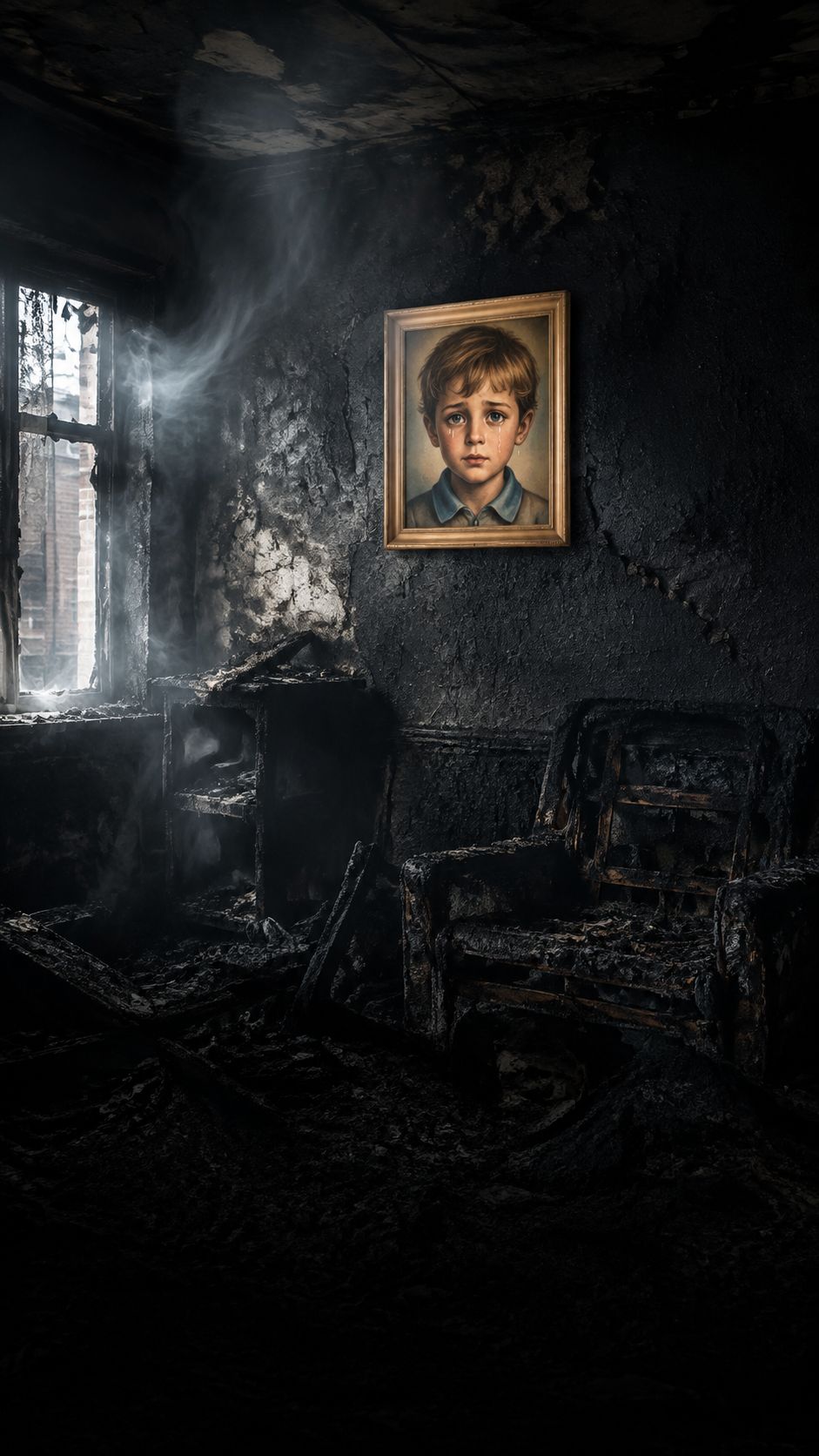 The Cursed Painting That Survived House Fires
A cheap mass-produced print sparked a nationwide panic that it caused fires, and always survived the ashes untouched.
London, United Kingdom · 1985 · same site
- The Disease That Killed By Nightfall
Tudor England lived in terror of a plague so fast it could kill a healthy person before sundown.
London, United Kingdom · 1485 · same site
More like this
- The Heretic Burned By The Reformers Who Fled Rome
Calvin's Geneva burned a brilliant Spanish physician for his beliefs, then, centuries later, erected a monument of atonement.
Champel, Geneva, Switzerland · 1553
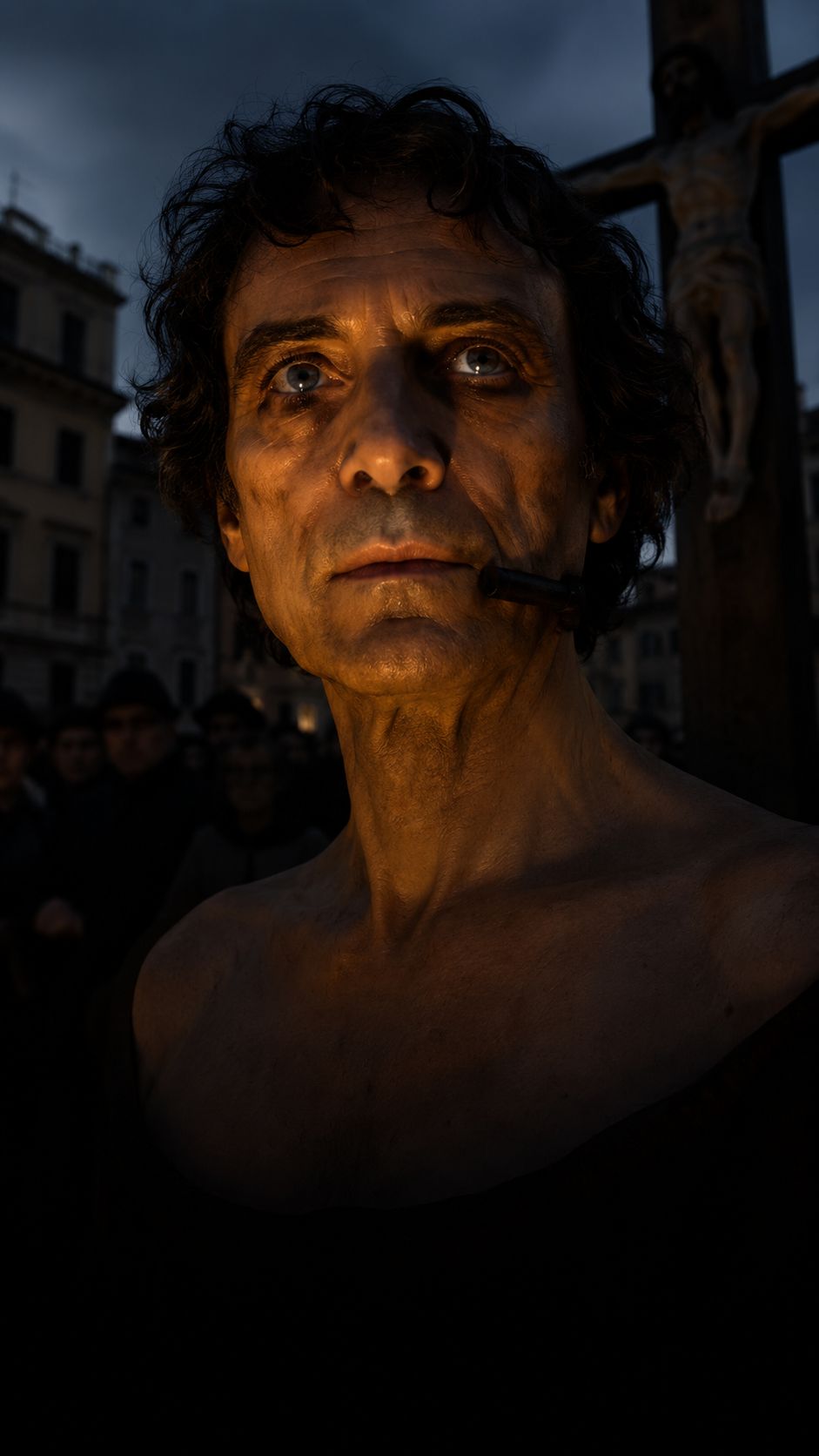 The Heretic Burned For What He Thought
After eight years of imprisonment, he refused to recant his vision of an infinite universe, and paid with his life.
Campo de' Fiori, Rome, Italy · 1600
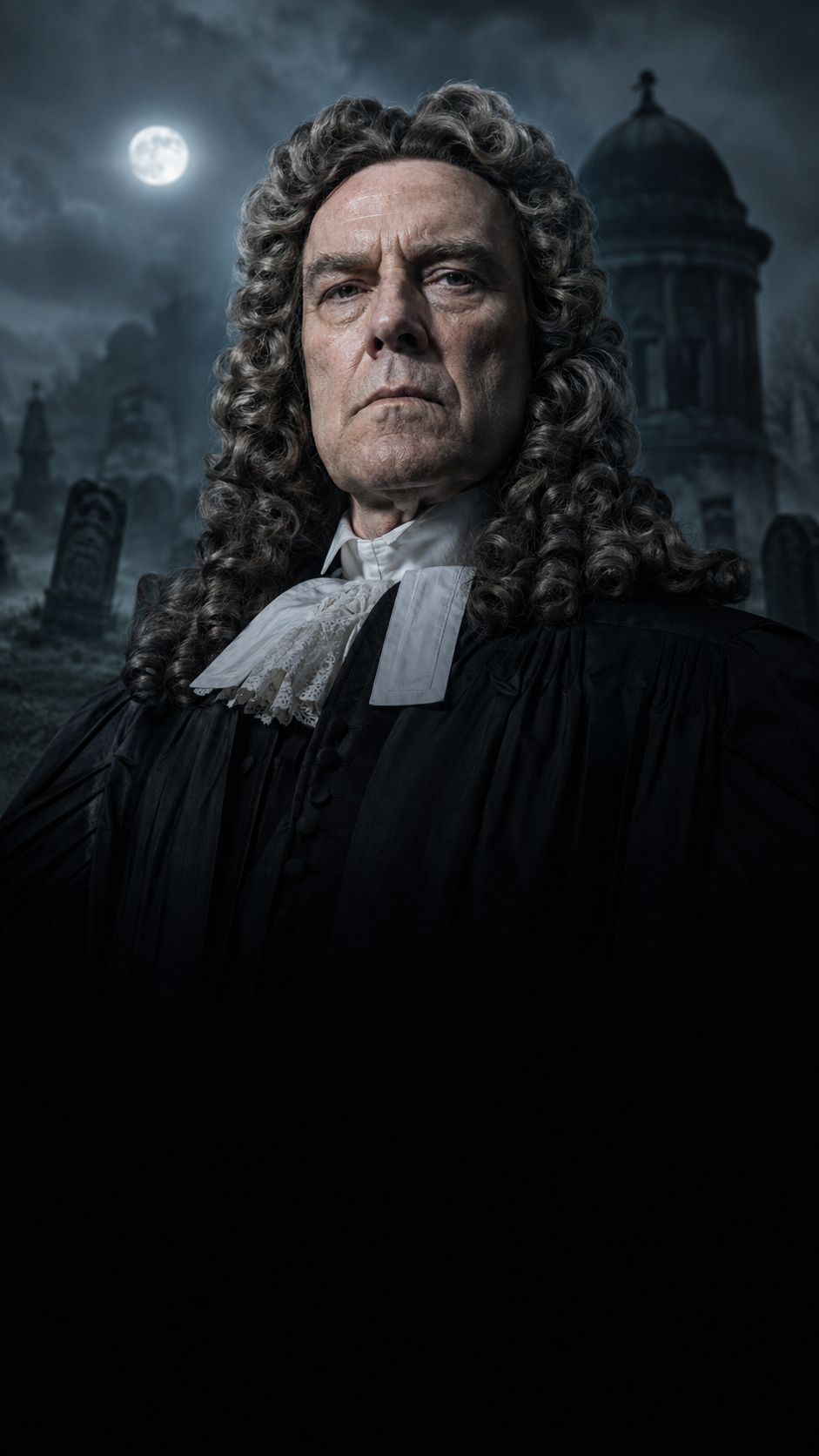 The Poltergeist That Attacks Visitors In Edinburgh
Over 350 visitors have reported being scratched, bruised and knocked unconscious at one graveyard tomb.
Greyfriars Kirkyard, Edinburgh, United Kingdom · 1999
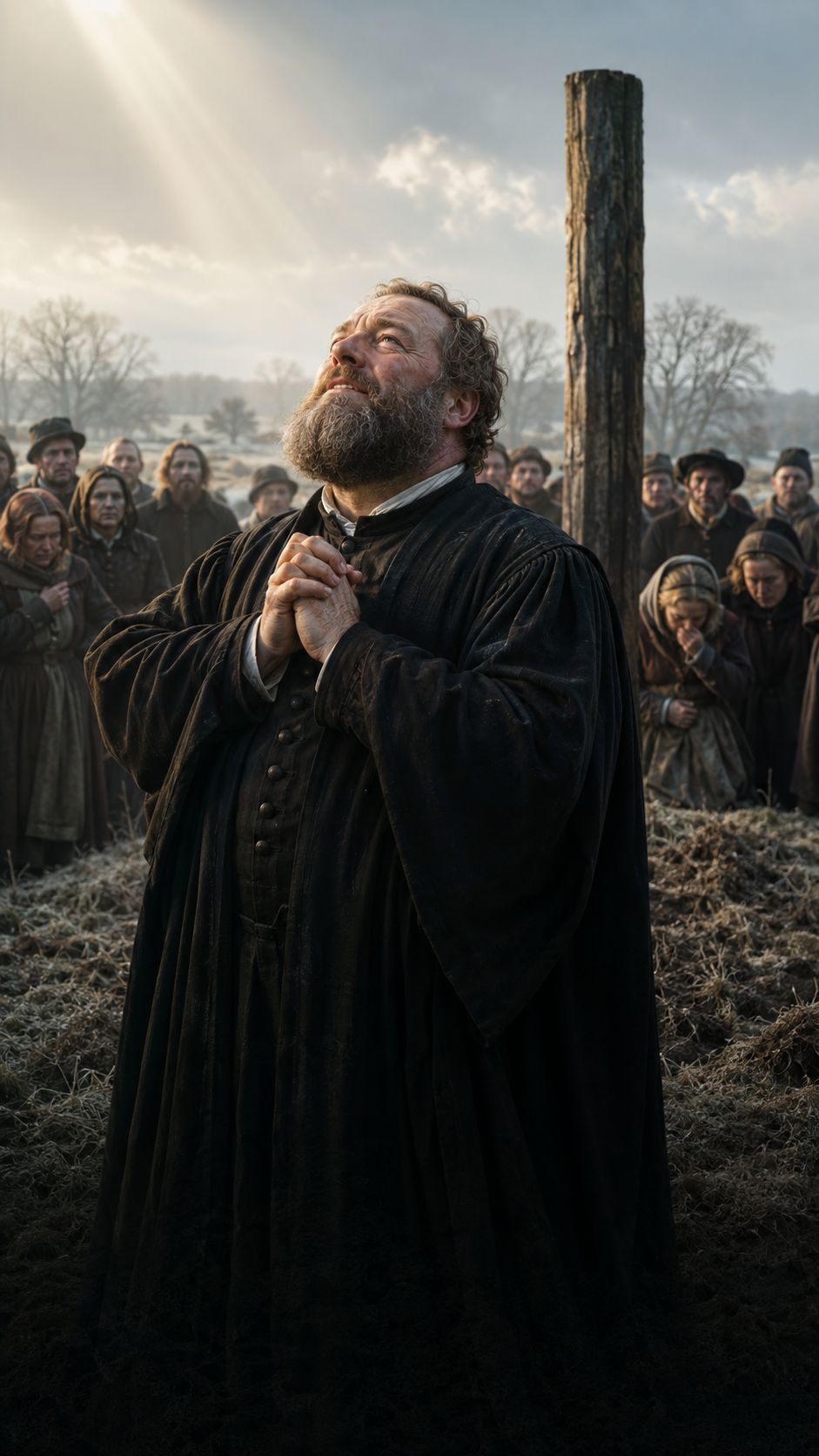 The Parson Who Danced To His Own Burning
A beloved country parson faced being burned alive with such joy that he turned his execution into a triumph.
Hadleigh, Suffolk, United Kingdom · 1555