
The Sutton Hoo ship burial is one of the most breathtaking and haunting archaeological discoveries ever made — the grave of a lost Anglo-Saxon king who vanished so completely that all that remained of him was a body-shaped void in the earth, surrounded by a fortune in gold.
For centuries, on a windswept stretch of sandy heathland above the River Deben in Suffolk, England, there stood a group of mysterious grassy mounds. Local legend whispered of buried treasure and ghosts. And in the 1930s, the landowner — a widow named Edith Pretty, who lived on the estate and had long been curious about the barrows on her land — decided to find out what was inside them. In 1939, she hired a local, self-taught archaeologist named Basil Brown to start digging.
The Horror
What Basil Brown uncovered, as he carefully brushed away the sandy soil of the largest mound, was something no one had dared to imagine. He began to find iron rivets — ship’s rivets — lying in the earth in a regular pattern. And slowly, astonishingly, the shape of an entire ship emerged from the ground: a great Anglo-Saxon longship, ninety feet long, that had been dragged up from the river more than 1,300 years before, hauled to the top of the hill, and buried whole beneath an enormous mound of earth as a colossal grave.
But the ship itself was a ghost. In the thirteen centuries it had lain in the acidic Suffolk sand, every plank of its oak timber had completely rotted away into nothing. What remained was extraordinary: a perfect impression of the vanished ship, pressed into the sand — a “ghost ship,” its every timber and curve preserved as a stain and a shadow in the earth, held in shape only by the iron rivets, which had stayed exactly where the shipwrights had hammered them. The archaeologists were excavating a ship that was no longer there, reading its shape in the discoloured sand like a photograph developing in the ground.
And at the heart of the ghost ship, they found the burial chamber — and the treasure. It was, and remains, the richest and most important early medieval grave ever discovered in Europe. Chamber after chamber of astonishing wealth emerged from the sand: intricate gold jewellery inlaid with thousands of tiny cut garnets, of a craftsmanship so fine it stunned the modern world; a great gold belt buckle; silver bowls and a silver dish from the distant Byzantine Empire; drinking horns, a lyre, weapons, and a magnificent pattern-welded sword. And, above all, the object that would become the very face of the Anglo-Saxon age: the Sutton Hoo helmet — a fearsome iron and bronze warrior’s mask, decorated with warriors and dragons, its face-guard forming the shape of a great bird or beast in flight. It is one of the most iconic objects in all of British history.
This was, without question, the grave of a king. The sheer scale of it — an entire ship, a mound, a hoard of royal treasure from across the known world — could only have belonged to one of the most powerful rulers of his age. The find single-handedly transformed our understanding of the so-called “Dark Ages,” proving that the Anglo-Saxons were not crude barbarians but a sophisticated, wealthy, artistically brilliant civilisation, connected by trade to Byzantium and the Mediterranean — the very world of gold-giving kings and mead-halls described in the epic poem Beowulf.
But there was one great, eerie mystery. Where was the king?
Because in all that treasure, in the whole of that magnificent burial chamber, the 1939 excavators found no body. No skeleton. No bones. Nothing. The regalia — the sword, the belt, the shoulder-clasps — lay arranged in the chamber in the precise positions they would have occupied if they were being worn by a man lying in state. But of the man himself, there was no trace at all. It was as if the king had simply vanished, leaving his treasures laid out around the empty space where his body should have been.
THE MODERN RELIC For years, this led to a genuine debate: was Sutton Hoo a “cenotaph” — an empty memorial tomb, a monument to a king whose body was buried elsewhere or lost at sea? Or had there once been a body that had simply… disappeared?
The answer came with later, more scientific excavations in the 1960s. When archaeologists carefully analysed the soil in the burial chamber, they found the truth. There had been a body. But the same fiercely acidic sand that had dissolved the great oak ship had also, over thirteen centuries, completely dissolved the king himself — flesh, and then even bone, consumed entirely by the chemistry of the earth. All that remained of him was a subtle, body-shaped trace in the soil, a faint chemical shadow, and slightly raised levels of phosphate where a human being had once lain. The king had become a ghost as complete as his ghost ship — an absence in the shape of a man, ringed by the gold he took to his grave.
So who was he? The treasures date the burial to the early 600s AD, and by far the leading theory is that this was the grave of Rædwald, King of the East Angles, who died around 624 and was one of the most powerful rulers in all of England — a “High King” over other Anglo-Saxon kingdoms. Rædwald was a fascinating figure caught between two worlds: he had converted to Christianity, but famously hedged his bets, reportedly keeping both a Christian altar and a pagan one in the same temple. And Sutton Hoo reflects exactly that: a pagan-style ship burial laden with treasure for the afterlife, yet containing a pair of Christian silver spoons. A king standing on the very hinge of history, as the old gods gave way to the new. We can’t be certain it’s Rædwald — with no body and no inscription, we may never know for sure — but the time, the place, and the sheer royal magnificence all point to him.
The relic is one of the greatest treasures in the world, and you can go and stand before it. The Sutton Hoo treasures — the helmet, the gold, the garnets, the ghost of a lost kingdom — are displayed in the British Museum in London, given to the nation by Edith Pretty, the woman whose curiosity uncovered them. And the site itself, the field of mounds above the River Deben in Suffolk, is cared for by the National Trust, where you can walk among the barrows and stand on the spot where a king was rowed into eternity in a ninety-foot ship. The story of that summer of 1939 — Edith Pretty and Basil Brown brushing away the sand on the eve of the Second World War — was told in the film The Dig. The king vanished into the earth completely, leaving only a shadow where he lay. But his golden face still stares out at us, thirteen centuries later — the ghost of a lost kingdom, risen from the sand.
Nearby on the Dark Atlas
 The Self-Appointed Witchfinder General
A 25-year-old with no official authority talked terrified communities into executing more witches than the previous century combined.
Mistley, United Kingdom · 1645 · 24 km away
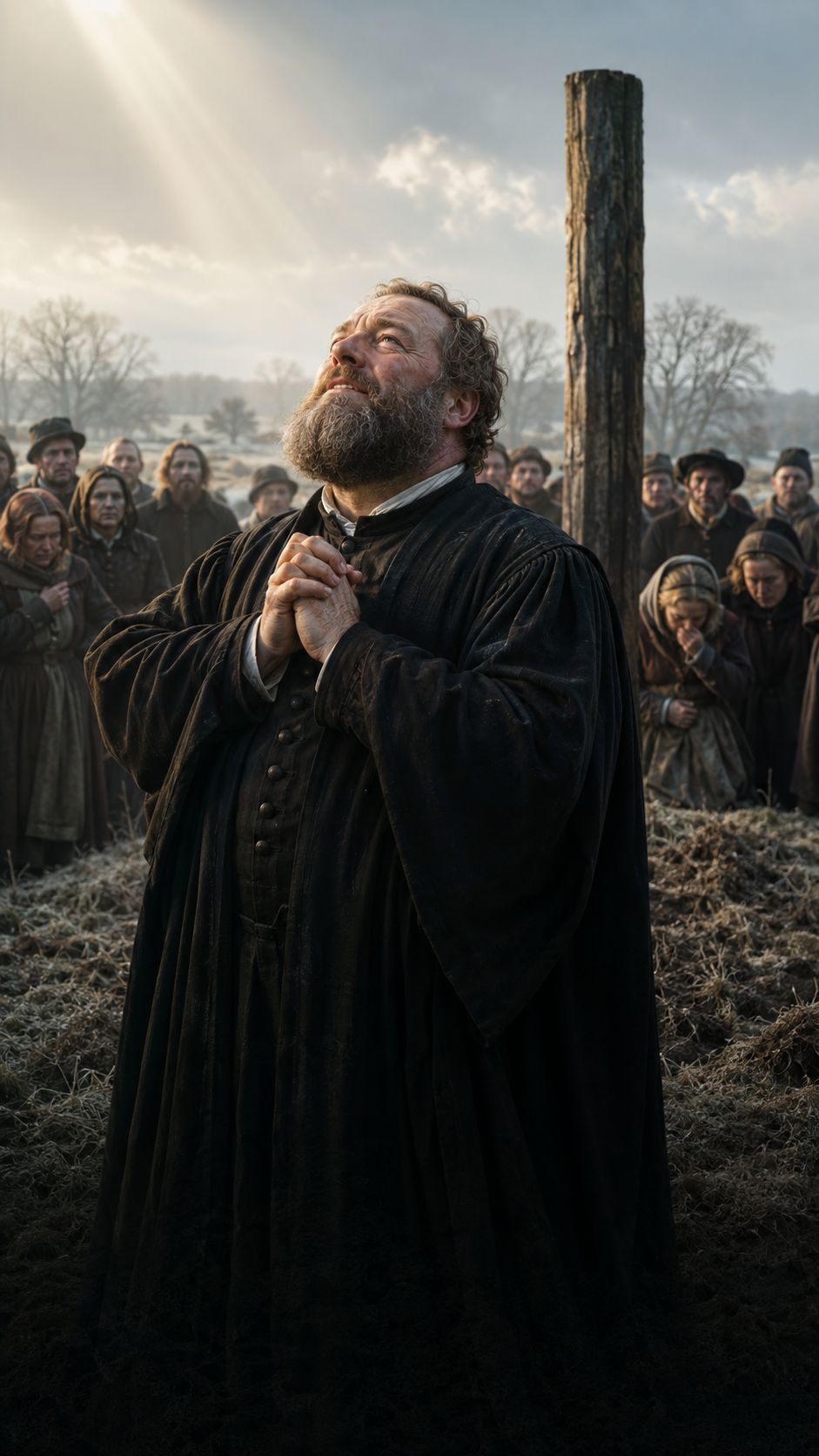 The Parson Who Danced To His Own Burning
A beloved country parson faced being burned alive with such joy that he turned his execution into a triumph.
Hadleigh, Suffolk, United Kingdom · 1555 · 27 km away
 The King Whose Head Called Out From The Woods
A Viking army executed an English king and hid his head in the forest, where his followers heard it calling back to them.
Hoxne, Suffolk, United Kingdom · 869 · 31 km away
- The Murder Solved By A Stepmother's Dream
A young woman was shot and buried under a barn floor, found only because her stepmother kept dreaming of the spot.
Polstead, United Kingdom · 1827 · 33 km away
More like this
- The Leper King's Story No Film Would Show
Kingdom of Heaven gave him a dignified death behind a silver mask, the truth was far crueller.
Jerusalem, Israel · 1185
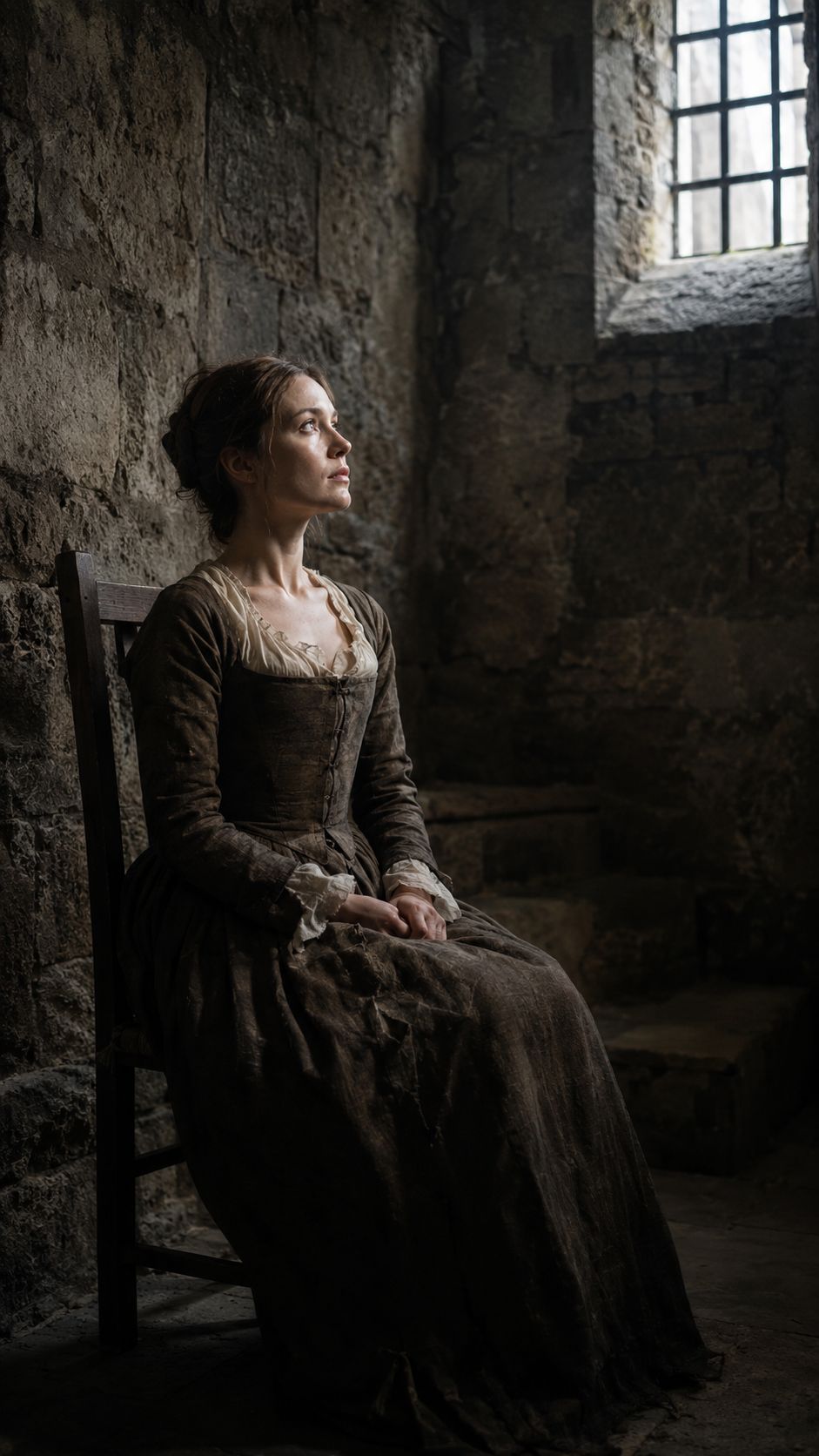 The Rape Trial That Ended In Trial By Combat
A woman's accusation of rape led to France's last judicial duel, with her own life staked on the outcome.
Paris, France · 1386
- The Parish Registers Of The Beast's Victims
Between 1764 and 1767 something killed roughly a hundred people, recorded in the registers as 'devoured by the beast.'
Saugues, France · 1764
- The Manufacturing Of England's Most Haunted House
For decades it was called the most haunted house in England, until its ghost story revealed how a haunting gets made.
Borley, Essex, United Kingdom · 1929