
“The most haunted house in England.” It is one of the most famous phrases in the history of the paranormal, and it was attached to a single grim building on the Essex–Suffolk border: Borley Rectory. For decades it drew ghost-hunters, journalists, and the merely curious. And its real story is more revealing than any phantom — because Borley is, in the end, a case study in how a haunting gets manufactured. THE HISTORY: The rectory was a large, gloomy red-brick house of some 32 rooms, built in 1862 (occupied from 1863) by the Reverend Henry Dawson Ellis Bull, rector of the village of Borley. The Bull family lived there for decades. From early on, the house gathered stories — footsteps, a phantom coach, and above all the legend of a spectral nun who was said to glide along a path in the grounds that became known as the “Nun’s Walk.” The romantic tale attached to her — that she was a young nun who fell in love, tried to elope with a monk, and was caught and bricked up alive in the walls — is exactly the kind of gothic story that Victorian families loved to tell, and there is no historical evidence for it at all. It appears to have been embellishment, quite possibly invented or elaborated by the Bull children themselves. THE FAMOUS INVESTIGATION: Borley might have remained a minor local legend if not for one man: the celebrated — and controversial — psychic researcher Harry Price. He first investigated the rectory in 1929, on a commission from the Daily Mirror, and he returned famously in 1937–1938, renting the house for an entire year to conduct a round-the-clock study, recruiting volunteer observers to log every creak and cold draught. It was Price who packaged Borley for the world and gave it that unforgettable title, “the most haunted house in England.” The most dramatic phenomena centred on the years 1930 to 1935, when the Reverend Lionel Foyster and his much younger wife Marianne lived there. During their time, the house apparently erupted: objects thrown, bells ringing, and — most eerily of all — messages appearing on the walls, seemingly scrawled by an unseen hand, pleading with Marianne by name. The most quoted reads: “Marianne, please help get…” — trailing off, as if a trapped spirit were begging her for release, or for light, or for prayers. Later, during Price’s séances, a spirit reportedly identified itself through a planchette as a murdered French nun named Marie Lairre, tying the wall-writing and the Nun’s Walk into one tragic narrative. THE FIRE: On 27 February 1939, the rectory’s story reached its cinematic end. A new owner, Captain W. H. Gregson, was unpacking books when an oil lamp was knocked over, and the house went up. As it burned, a witness claimed to see figures moving in the flames and a face at an upper window. The insurance company suspected the fire may have been deliberate. The gutted shell was finally demolished in 1944. It was the perfect ending for a haunted house — to die dramatically in fire, with ghosts glimpsed in the smoke. THE HORROR — OR THE HOAX: And now the twist that the ghost tours rarely dwell on. In 1956, the Society for Psychical Research — the very body devoted to studying the paranormal seriously — published a devastating report, The Haunting of Borley Rectory, by Eric Dingwall, Kathleen Goldney, and Trevor Hall. Their conclusion was that the phenomena were faked or the product of natural causes — rats, draughts through an oddly built house, wishful observers — and, most damningly, that Harry Price had presented a deliberately distorted account to keep the legend alive. A Daily Mail reporter, Charles Sutton, alleged that during one visit he had caught Price with his pockets full of pebbles — the implication being that Price himself was throwing the stones he then reported as poltergeist activity. And Marianne Foyster, the woman at the very centre of the wall-writing drama, later admitted she had seen no genuine apparitions, attributing the noises to the wind and to pranks — and hinting that some of the “phenomena” had helpfully covered up rather more earthly secrets in her own private life. The bricked-up nun was debunked as having no historical foundation as far back as 1938. So what was Borley? Almost certainly a real, ordinary, draughty Victorian house onto which layer after layer of story was applied — by imaginative children, by a suggestible and unhappy household, and above all by a brilliant showman of a researcher who understood that “the most haunted house in England” was a phrase that would never stop selling. The genuine mystery of Borley is not whether a nun walks the garden. It is how easily human beings, wanting to believe, will build a ghost out of rats, wind, pebbles, and one man’s genius for publicity. It helps to understand who Harry Price was, because he is really the central character of Borley. Price was a gifted and genuinely knowledgeable psychic researcher who had made his name exposing fraudulent mediums — he knew every trick of the séance room because he had spent years catching people using them. That is precisely what makes his role at Borley so damning: a man who understood deception better than almost anyone alive stood accused of practising it. He was also a brilliant self-publicist who grasped, decades ahead of his time, that a haunted house is a product, and that the phrase “the most haunted house in England” was worth more than any actual ghost. His two bestselling books on Borley cemented the legend in the public mind, and by the time the Society for Psychical Research quietly dismantled his evidence in 1956, Price himself was dead and the story had long since escaped him. The house was already ash; the legend, unkillable.
The Modern Relic
The rectory itself is gone — the site, on Hall Lane in the village of Borley near Sudbury, is private land, and there is nothing left of the house to see. But Borley Church, the little Church of the Blessed Virgin Mary with 12th-century origins, still stands close by, and it remains a magnet for ghost-hunters to this day — so much so that the church and residents actively discourage trespassers and night-time visitors hoping to catch the nun. If you go, go respectfully and in daylight, and remember what you are really looking at: not the most haunted house in England, but the most haunting proof of how badly we want one.
③ Hashtags
Nearby on the Dark Atlas
- The Murder Solved By A Stepmother's Dream
A young woman was shot and buried under a barn floor, found only because her stepmother kept dreaming of the spot.
Polstead, United Kingdom · 1827 · 18 km away
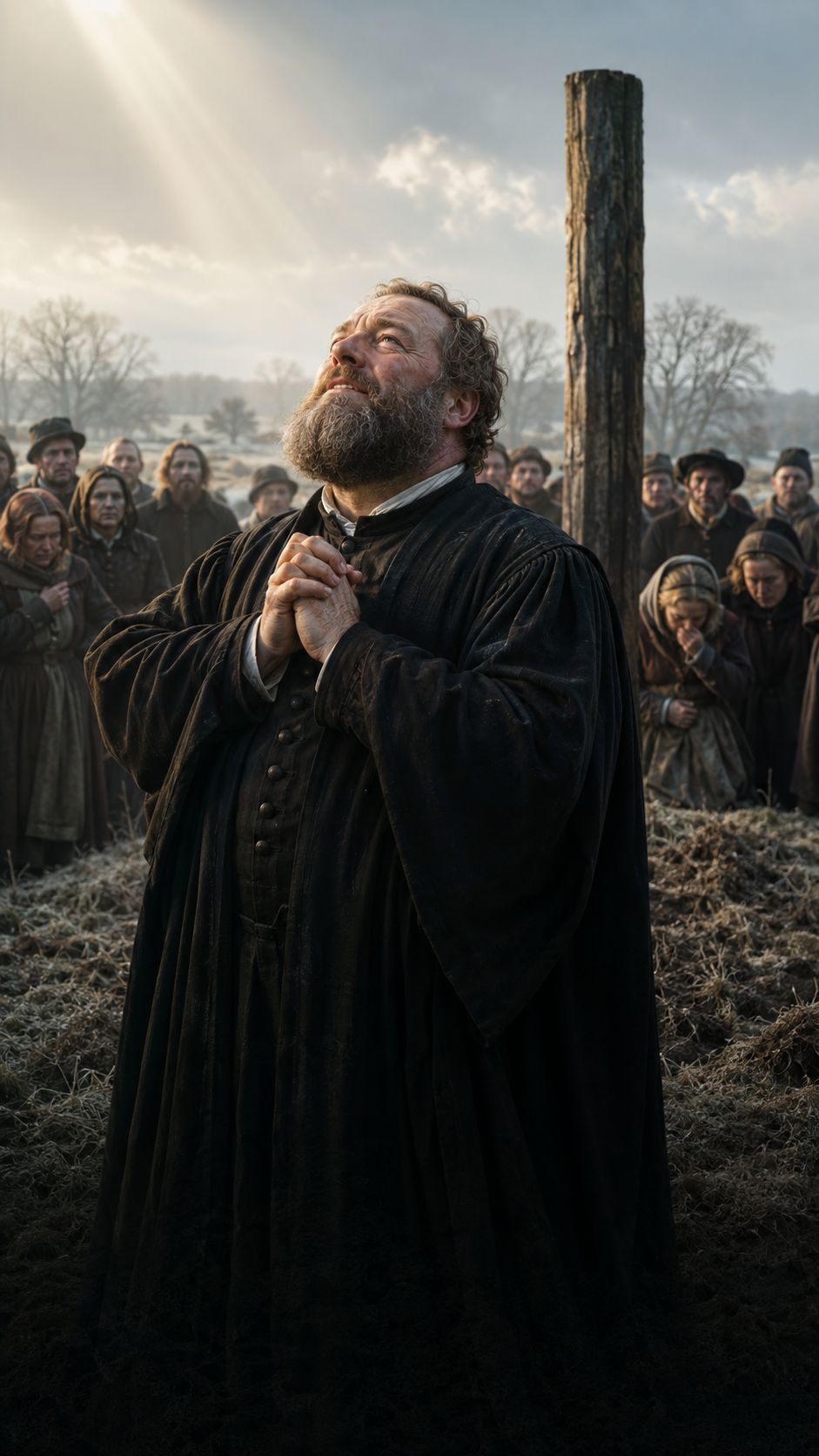 The Parson Who Danced To His Own Burning
A beloved country parson faced being burned alive with such joy that he turned his execution into a triumph.
Hadleigh, Suffolk, United Kingdom · 1555 · 25 km away
- The First Woman Executed For Witchcraft In England
Villagers said her cat spoke in a human voice and drank blood in exchange for killing her enemies.
Chelmsford, United Kingdom · 1566 · 30 km away
 The Self-Appointed Witchfinder General
A 25-year-old with no official authority talked terrified communities into executing more witches than the previous century combined.
Mistley, United Kingdom · 1645 · 33 km away
More like this
- The Most Haunted House In London
For a whole Victorian generation, one Mayfair townhouse carried a reputation no other address in London could match.
Berkeley Square, London, United Kingdom · 1879
- England's Most Fought-Over Haunted Castle
Centuries of border warfare and torture wrote Chillingham's darkness into history long before anyone spoke of ghosts.
Chillingham, Northumberland, United Kingdom · 1245
- The Chair No One Is Allowed To Sit In
A murderer's cursed armchair now hangs on a museum wall, five feet off the ground, so no one can sit in it again.
Thirsk, United Kingdom · 1702
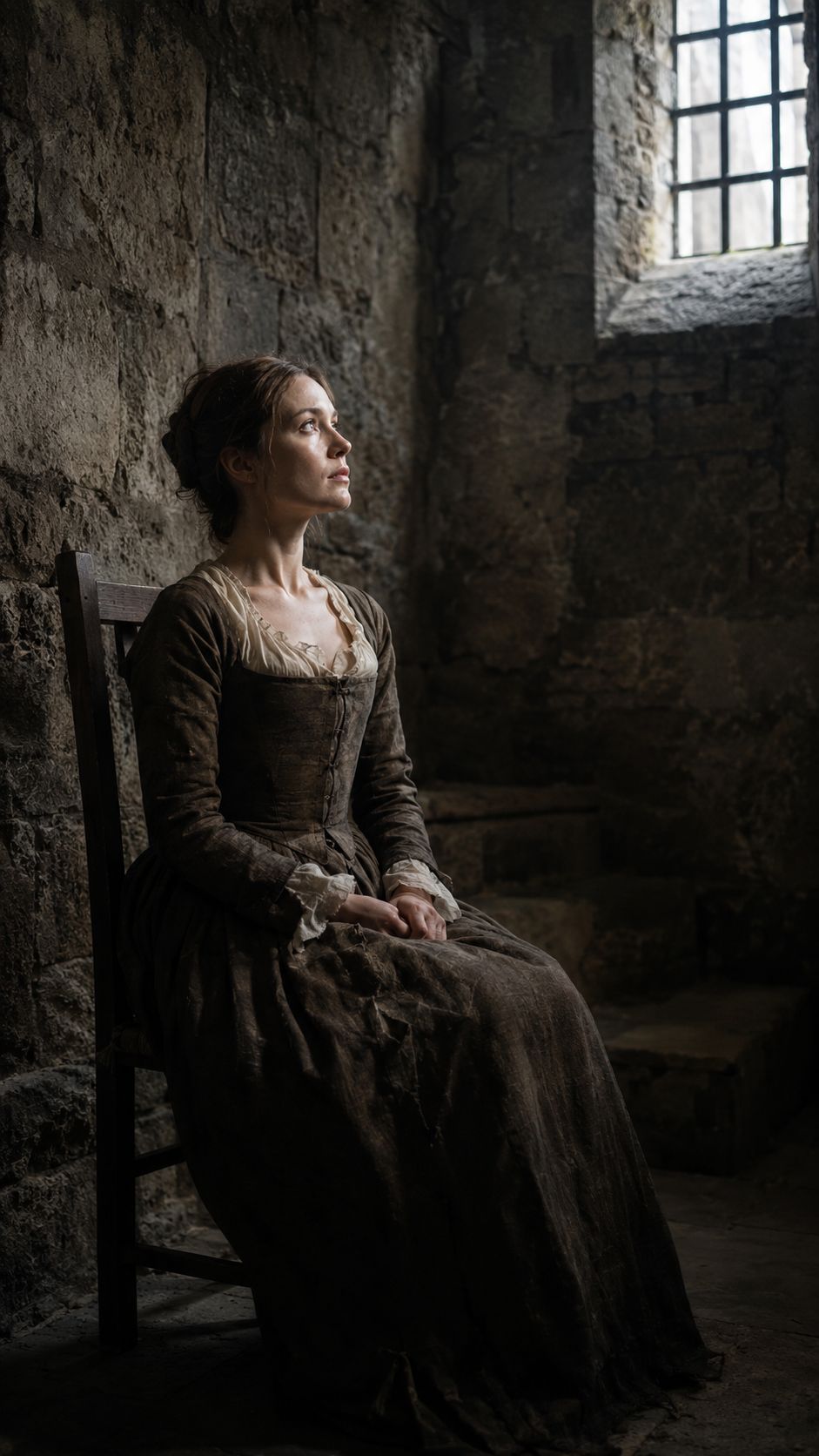 The Rape Trial That Ended In Trial By Combat
A woman's accusation of rape led to France's last judicial duel, with her own life staked on the outcome.
Paris, France · 1386