
The Exorcist is widely considered the most terrifying horror film ever made — but William Peter Blatty, who wrote the novel and the screenplay, always insisted it was based on real events. The real case happened not in Georgetown, but in the small Maryland suburb of Cottage City, in 1949, to a 13-year-old boy the Church called Roland Doe. His real identity was kept secret for more than seventy years, and the priest’s private diary of what happened to him stayed sealed in Church records for decades.
Roland — a pseudonym used to protect his identity — was an only child raised in a German Lutheran family. His favorite aunt, a committed spiritualist, had taught him how to use a Ouija board. When she died in January 1949, Roland reportedly tried to use it to contact her — and that’s when things started happening. The family heard scratching and dripping sounds inside the walls. Furniture reportedly moved on its own, and objects seemed to fly across rooms. Then the boy began to change. His bed shook violently. He spoke in a voice that didn’t sound like his own. And scratches began appearing on his skin, spelling out words like “HELL” — and even “LOUIS,” a message his family took as a sign to travel to relatives in St. Louis, Missouri.
THE HORROR Doctors and psychiatrists found nothing wrong with him. The family’s Lutheran minister couldn’t help either. Eventually they turned to the Catholic Church, and a team of Jesuit priests led by Father William Bowdern, assisted by Father Raymond Bishop and a young seminarian named Walter Halloran, began performing the rite of exorcism — first at a relative’s house, later in a locked room at the Alexian Brothers Hospital in St. Louis. Witnesses, including priests, seminarians, and hospital staff, reported that Roland’s mattress shook so hard the springs worked loose from the bed frame. During one session, with his eyes shut, he threw a single accurate punch that broke Halloran’s nose. He reacted violently to the Latin of the ritual and to holy water, screaming and cursing in a voice witnesses said didn’t sound human — though claims that he fluently answered questions in ancient languages he’d never studied are one of the story’s most exaggerated details, and aren’t clearly supported by the priests’ own written accounts. He vomited and spat at those praying over him. One of the priests later said he personally watched a bottle of holy water fly across the room and strike the wall — without breaking. The sessions went on for weeks, with the boy reportedly screaming that he was possessed by more than one demon, including Satan himself.
And then, suddenly, it stopped. On the morning of Easter Monday, 1949, Roland came out of the ordeal calm, saying only, “He’s gone.” The marks on his body faded. The voice was gone. He married, had three children, and quietly built a nearly forty-year career as an engineer at NASA’s Goddard Space Flight Center, reportedly helping develop heat-resistant technology used on the Apollo missions that put Americans on the Moon. He never spoke publicly about 1949. He died in May 2020, at 84 years old.
THE MODERN RELIC The relic is the record — and the reveal that came generations later. Father Bishop’s handwritten diary of the case survived and became the primary source historians still rely on, eventually published as part of Thomas B. Allen’s 1993 book Possessed. But the Church and the family kept Roland Doe’s real name a secret for over seventy years. It wasn’t until December 2021, a year after his death, that investigators finally confirmed who he really was: Ronald Edwin Hunkeler, a quiet Maryland man who spent almost his entire adult life working on the technology that helped America reach the Moon, all while carrying the secret of the year he spent as the most famous “possessed” boy in the country.
Nearby on the Dark Atlas
 America's First Serial Killers
Shot down mid-chase, one killer's severed head was mounted on a pole — and locals swear you can still hear him laughing.
Webster County, Kentucky, United States · 1799 · 257 km away
 Eight Went to Sleep, None Woke Up
Every mirror in the house was covered the night an axe murderer moved silently through eight sleeping victims.
Villisca, Iowa, United States · 1912 · 482 km away
 The Farmhouse That Inspired Modern Horror
A quiet Wisconsin handyman's crimes were so grotesque they invented Norman Bates, Leatherface and Buffalo Bill.
Plainfield, United States · 1957 · 623 km away
- The Fire That Killed 322 Men Locked in Their Cells
As flames tore through an overcrowded cellblock, guards had the keys, and hundreds burned to death still chained inside.
Columbus, United States · 1930 · 637 km away
More like this
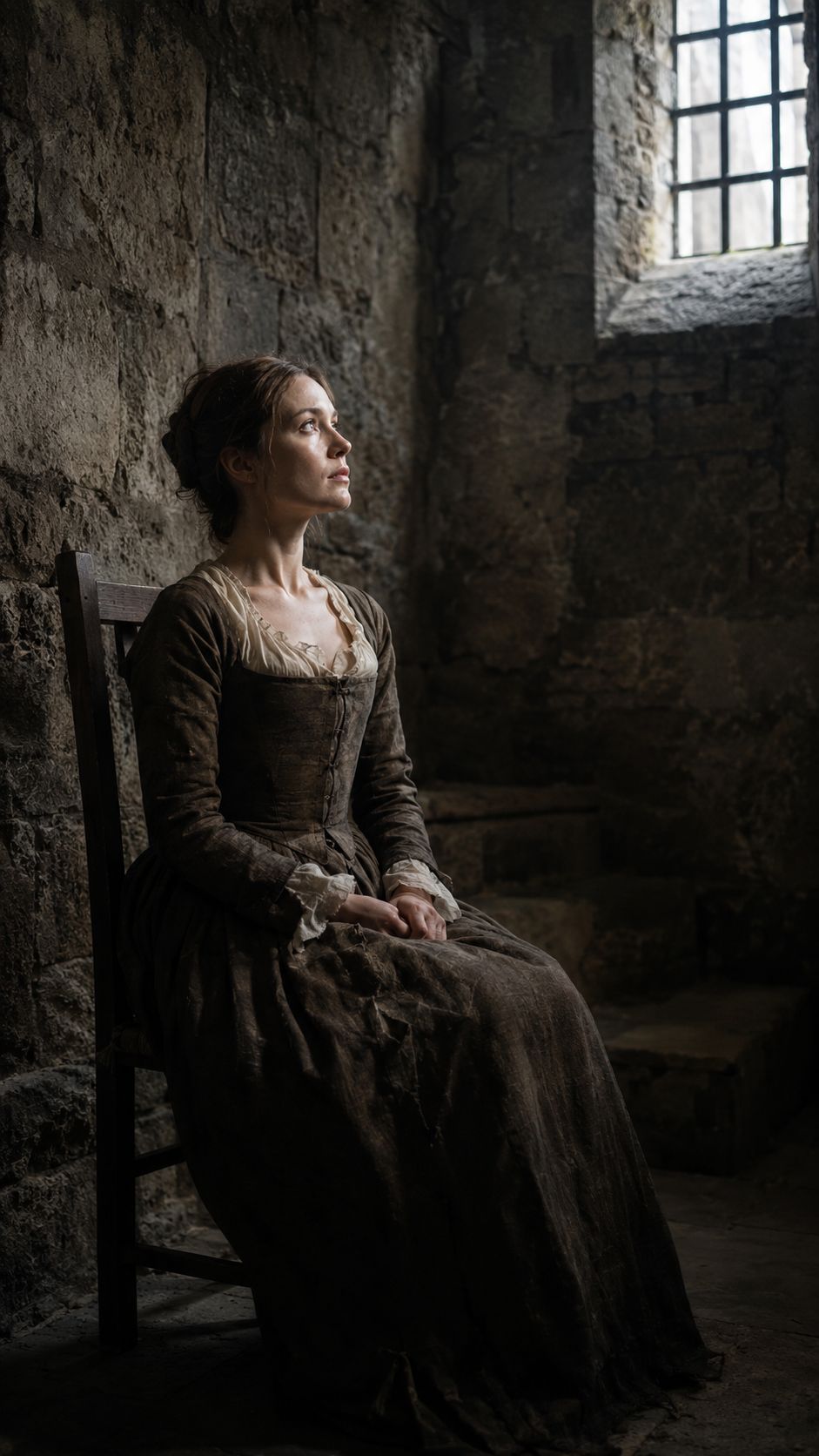 The Rape Trial That Ended In Trial By Combat
A woman's accusation of rape led to France's last judicial duel, with her own life staked on the outcome.
Paris, France · 1386
- The Parish Registers Of The Beast's Victims
Between 1764 and 1767 something killed roughly a hundred people, recorded in the registers as 'devoured by the beast.'
Saugues, France · 1764
- The Poisoner Of The Sun King's Court
Behind Versailles' glittering court, a fortune-teller ran a thriving trade selling poison to desperate noblewomen.
Place de Grève, Paris, France · 1680
- The Manufacturing Of England's Most Haunted House
For decades it was called the most haunted house in England, until its ghost story revealed how a haunting gets made.
Borley, Essex, United Kingdom · 1929