
Into the Wild is a beautiful, haunting film — the story of a bright young man who rejects a comfortable, conventional life, gives away everything he owns, and journeys into the Alaskan wilderness to find truth and freedom living alone in nature. It is romantic and inspiring, and it made Chris McCandless a hero to a generation of dreamers. But the true story is quieter, sadder, and far more sobering than the film’s beauty suggests — the real story of a gentle, idealistic young man who walked into the wild seeking meaning, and died there, alone and afraid, in a way that has haunted everyone who has learned the full truth of it.
To understand him, you have to understand who he really was. Christopher McCandless was born in 1968, a bright, intense, and idealistic young man from a well-off family in Virginia. He was a talented student who graduated from Emory University in 1990 — but he was also deeply troubled by what he saw as the emptiness and materialism of modern life, and by painful tensions within his own family. And so, upon graduating, he did something extraordinary: he gave away his entire savings, around twenty-four thousand dollars, to charity, abandoned his car and most of his possessions, cut off contact with his family, and set out to live as a wanderer. He took a new name for himself — “Alexander Supertramp” — and for two years he roamed the American West, working odd jobs, canoeing, and living free, driven by a genuine and passionate philosophy, drawn from the writers he loved like Thoreau and Tolstoy, of stripping life down to its raw essentials and finding truth in nature and solitude. It was a sincere quest. But it was building toward one final, fateful goal: Alaska. Chris dreamed of a “great Alaskan odyssey” — going alone into the deep wilderness, with almost nothing, to truly test himself and live off the land.
The Horror
In April 1992, he made that dream real. He hitchhiked to Alaska, and a local man dropped him at the head of a remote path called the Stampede Trail, on the edge of the Denali wilderness. And here is the first hard truth the romance obscures: Chris was dangerously unprepared. He carried only about four kilograms of rice, a small-calibre rifle, a few books, and a light bag. He had no map, no compass, no proper cold-weather gear, no real survival equipment. The man who dropped him off, an electrician named Jim Gallien, was so worried by how ill-equipped this young man was that he tried to talk him out of it, and even gave Chris his own boots and some food. But Chris was determined. He walked off into the wilderness alone.
A few miles down the trail, he found shelter: an old, abandoned bus — a 1940s Fairbanks city bus, number 142, that had been left out in the wilderness decades earlier as a backcountry shelter. Chris made it his home, and scratched a jubilant message on it, naming it the “Magic Bus.” And for a time, he lived the life he had dreamed of. He hunted small game and birds, foraged for wild plants, read his books, and filled a journal and rolls of film with his experiences. He survived, alone, in the Alaskan wild, for around a hundred and thirteen days. But the wilderness he had romanticised was not romantic. It was indifferent, and it was closing in.
The turning point came when he decided to walk back out to civilisation, in July. But when he reached the Teklanika River — the same river he had crossed easily on the way in, when it was low — he found it transformed. The summer melt had swollen it into a wide, fast, freezing, impassable torrent. Chris had no way to know that a hand-operated cable car crossing existed just a short distance away; the river simply blocked his path, and he turned back to the bus, now truly trapped. And slowly, out there alone, he began to starve. The game grew scarce. His rice ran out. His body, with no reserves of fat, began to consume itself. His journal entries grew weaker and more desperate as he grew thinner and more exhausted, his handwriting failing. At some point in his final weeks, in a moment that captures the full horror of his situation, he wrote out a note and posted it on the door of the bus — an SOS, a plea to any stranger who might pass. It read: “S.O.S. I need your help. I am injured, near death, and too weak to hike out of here. I am all alone, this is no joke. In the name of God, please remain to save me.” No one came. The trail was too remote; there was no one to see it.
Chris McCandless died in that bus, in his sleeping bag, in mid-August 1992, at the age of twenty-four. He had been alone for around a hundred and thirteen days. When moose hunters discovered his body about two and a half weeks later, he weighed only around thirty kilograms — sixty-six pounds. And among his final writings, on a page of one of his books, he left words that have broken the hearts of everyone who has read them since — the hard-won conclusion of a young man who had gone into the wilderness to escape people, and learned, too late, the opposite lesson. He wrote: “Happiness is only real when shared.” Near the end, he also wrote a farewell that read simply: “I have had a happy life and thank the Lord. Goodbye and may God bless all!”
The Modern Relic
Exactly what killed Chris — beyond the underlying starvation — has been debated ever since. His autopsy recorded starvation. But the writer Jon Krakauer, who told his story in the famous book, came to believe that Chris had been partly poisoned: that the wild potato seeds he had been eating to survive contained a toxic compound that, in his already-starving state, may have crippled his body’s ability to absorb nutrition, trapping him in a downward spiral he could not escape even as he ate. The theory remains genuinely disputed among scientists. But whether by pure starvation or by a poison that finished what hunger began, the result was the same: a young man dead alone in the wild he had loved and underestimated.
The relic is the Magic Bus itself — and its own strange, dark afterlife. After the book and the film made Chris McCandless famous, the abandoned bus on the Stampede Trail became a place of pilgrimage. Thousands of people, moved by his story, set out to hike to it, to sit where he had sat, to take their photograph by the bus. But the wilderness that killed Chris was still just as dangerous. Pilgrim after pilgrim had to be rescued after getting lost or stranded — and, tragically, some died trying to reach it, drowning in the very same Teklanika River that had trapped Chris, including a young Belarusian woman in 2019. The bus had become a “steel tomb” that kept on claiming lives.
Finally, in June 2020, the state of Alaska took drastic action: a military helicopter airlifted Bus 142 out of the wilderness entirely, to end the deadly pilgrimages. The Magic Bus now rests, preserved and safe, at the University of Alaska Museum of the North in Fairbanks — where people can visit it without dying to do so. It stands there now as the real relic of Chris McCandless: not a symbol of a beautiful adventure, but of something far more human and more heartbreaking — a bright, searching, flawed young man who walked into the wild looking for a truer life, and found, in his last days, the simplest and saddest truth of all: that happiness is only real when shared.
Nearby on the Dark Atlas
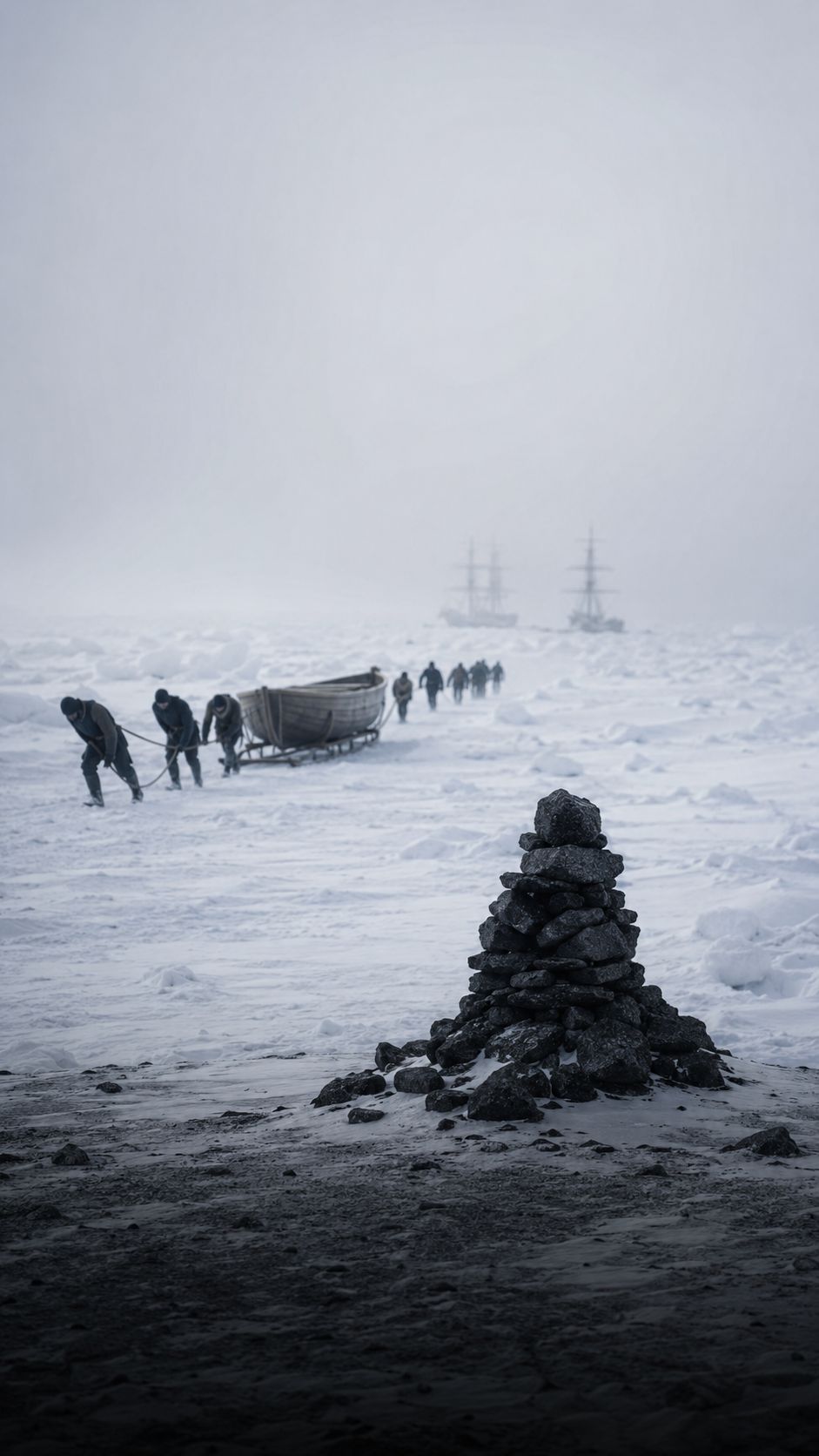 The Doomed Voyage To The Northwest Passage
129 men and the most advanced polar ships on earth vanished into the Arctic ice without a trace.
King William Island, Canada · 1845 · 2302 km away
 The Bridge That Danced Itself Apart
Drivers nickname a brand-new suspension bridge 'Galloping Gertie' for the way it moves, and then it moves one time too many.
Tacoma, Washington, United States · 1940 · 2479 km away
 The Shortcut That Cost Thirty-Nine Lives
A shortcut promised to save hundreds of miles — instead it trapped two families in the snow with nothing left to eat but each other.
Donner Pass, California, United States · 1847 · 3341 km away
- The Real Survival Story Behind The Revenant
Mauled by a bear and left for dead, a frontier trapper crawled across hundreds of miles of wilderness to survive.
Shadehill, South Dakota, United States · 1823 · 3491 km away
More like this
 The Rape Trial That Ended In Trial By Combat
A woman's accusation of rape led to France's last judicial duel, with her own life staked on the outcome.
Paris, France · 1386
- The Parish Registers Of The Beast's Victims
Between 1764 and 1767 something killed roughly a hundred people, recorded in the registers as 'devoured by the beast.'
Saugues, France · 1764
- The Manufacturing Of England's Most Haunted House
For decades it was called the most haunted house in England, until its ghost story revealed how a haunting gets made.
Borley, Essex, United Kingdom · 1929
- The Truth Behind The Elephant Man
The real man behind the famous film was quieter, stranger and far more heartbreaking than any screenplay.
Whitechapel, London, United Kingdom · 1890